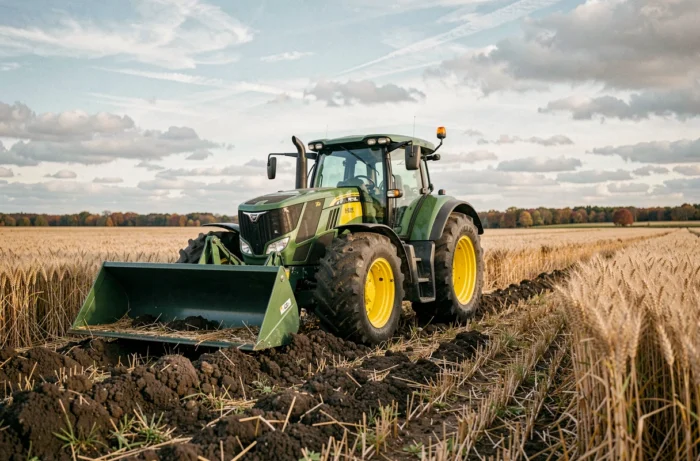
Agricultural machinery refers to the set of machines, tractors, and motorized equipment used in agricultural production, from soil preparation to harvesting. In France, this sector is undergoing a marked contraction phase: according to the sector analysis by AXEMA relayed by Maquinac, the value of the new equipment market is expected to decline by about 2% in 2026, extending a decrease that began after the peak in 2023.
Tractor registrations fell from 41,554 units in 2023 to 33,446 in 2025, representing a drop of nearly 20% over two years.
French Tractor Market: A Contraction Takes Hold
Standard tractors account for most of the decline. Between 2024 and 2025, registrations dropped from 39,198 to 33,446 units. This decline reflects a lasting wait-and-see attitude among operators, fueled by economic uncertainty regarding the margins of major crops.
AXEMA does not foresee a significant recovery before 2027. New equipment is not the only segment affected: a report published by Agribourgogne in the first half of 2026 indicates a decline in orders for used equipment, with sentiment described as “gloomy or cautious.”
To keep track of new launches despite this tense context, several specialized platforms allow users to discover the latest news on Loisiragri as manufacturers announce updates.
One segment stands out. Livestock equipment is faring better than the rest of the market, driven by its own investment cycles, which are less tied to grain prices. Milking robots, automated feeding systems, and handling equipment continue to find buyers, while purchases of combine harvesters or seeders are slowing down.
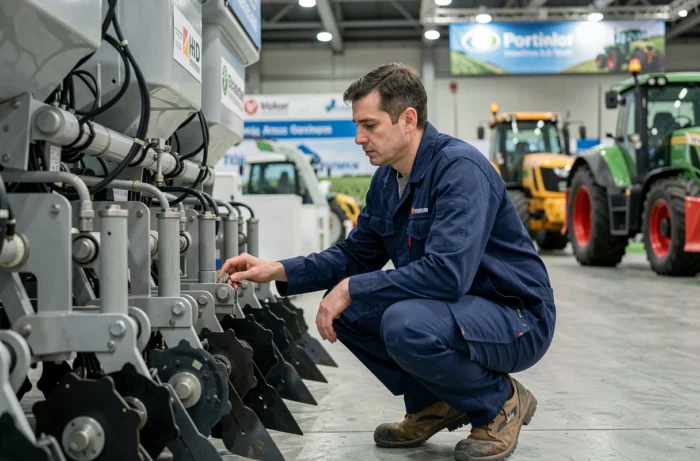
Autonomous Tractors and Weeding Robots: Automation in the Field
Automation represents the most structuring axis of innovation in current agricultural machinery. Advances are focused on two families of machines: autonomous tractors and robots dedicated to weeding or field monitoring.
Several manufacturers are developing platforms capable of operating without an operator in the cabin for repetitive tasks (soil work, seeding). A modular approach is progressing: rather than designing an entirely new machine, it involves making an existing tractor compatible with autonomous driving.
This logic responds to a concrete financial reality. In a declining market, few operators justify the purchase of a dedicated autonomous tractor. Adapting an existing tractor lowers the entry barrier and facilitates gradual adoption.
Robotized Weeding: Results in Real Conditions
Mechanical or laser weeding robots are maturing. During demonstrations at SPACE 2026 in Rennes, machines worked on several rows simultaneously, with real-time weed recognition via camera.
These systems directly target the reduction of herbicides. For farms in both large-scale crops and market gardening, this is both a regulatory lever and a cost-saving factor on inputs.
Spraying and Soil Work: Ergonomics Takes Precedence Over Power
The latest announcements from manufacturers in these areas share a common direction: gains focus on ergonomics and versatility, not on raw power. Optimizing existing machines rather than proposing technological breakthroughs corresponds to a market where every investment must be quickly profitable.
In spraying, increasing tank capacity without adding weight remains a priority. Minimizing trips for refilling while maintaining access to narrow plots is part of the most requested technical adjustments.
In the plowing segment, manufacturers are expanding the compatibility of their tools with high-power tractors. Adapting plow bodies to varied soil conditions is another frequent development focus in recent ranges.
Isobus Terminals and Digital Agriculture: Data at the Center of the Cabin
Precision agriculture relies on the collection, processing, and application of real-time parcel data. The Isobus protocol ensures communication between the tractor and its attached tools, regardless of the manufacturer. This interoperability forms the technical foundation for dose modulation, automatic guidance, and intervention traceability.
Specialists like Lacos offer onboard terminals that centralize parcel mapping, control of Isobus tools, and data transmission to farm management software.
Data as a Loyalty Lever for Manufacturers
The issue goes beyond comfort in the cabin. Manufacturers that master the software layer are gradually locking their customers into a proprietary ecosystem. An operator equipped with a Fendt, John Deere, or Trimble terminal is hesitant to switch brands if their histories, modulation maps, and subscriptions are tied to that platform.
Data lock-in now weighs as heavily as mechanical reliability in purchasing decisions. Third-party players like Lacos maintain a range of universal terminals, preserving operators’ freedom of choice against these closed ecosystems.
The French agricultural machinery market is seeing its sales volumes decline while the technical complexity of machines increases. Investments are refocusing on automation, data management, and optimization of the existing fleet. For operators, the choice of equipment now engages as much on the digital as on the mechanical front, a parameter that upcoming trade shows will document.