The interior design trends for 2026 share a common thread: warm palettes, tactile materials, and furniture with bold silhouettes. Applying these directions at home raises a practical question. How to integrate these codes into a furnished space, with its own light and budget constraints, without creating an interior that looks like a catalog page?
Adapting the 2026 decor trends to an already furnished interior
The majority of articles on decor trends assume that one starts with an empty room. In reality, a sofa purchased three years ago, a family table, or a floor with specific reflections impose their own direction. The task is to graft the new codes onto this existing base, not to replace it.
The first step is to observe the natural light in each room at different times. A terracotta hue, very present in the 2026 palettes, will appear dull in a north-facing living room with few windows, while it will take on its full depth in a room bathed in afternoon light. Natural light dictates the choice of colors, not the other way around.
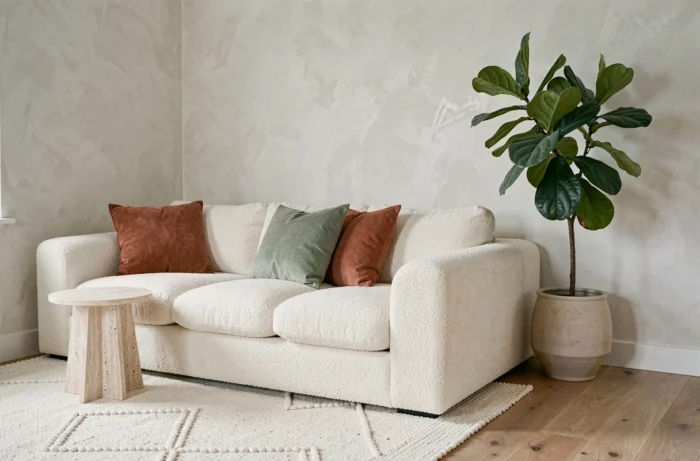
Starting from what you already have also helps protect your budget. A light wood armchair from the 1990s pairs naturally with the ochre and olive tones that dominate this season. Instead of replacing it, you can complement it with a washed linen cushion or a boucle wool throw to anchor the room in the current trend.
You can find textile pieces and accessories on Ma Déco Maison that facilitate this type of gradual transition without requiring major renovations.
Warm colors and natural materials: the foundation of the 2026 trends
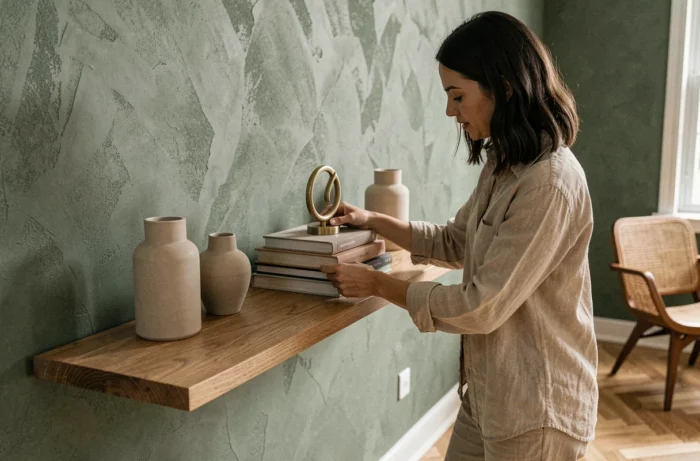
Cool palettes and minimalist grays that dominated in recent years are giving way to more enveloping tones. Terracotta, chocolate brown, ochre, and sage green form the chromatic core of the season. These shades share a common point: they create a sense of a warm, inhabited space, even in small areas.
In terms of materials, the trend is leaning towards the sensory. Solid wood, natural stone, rattan, artisanal ceramics, and linen are favored for their texture as much as for their appearance. Touch is as important as visual appeal in current interior decoration choices.
Practically, this means that a laminate countertop mimicking marble will be less convincing than a matte stoneware tile, even when laid on a small surface. The gap between appearance and tactile sensation becomes a selection criterion, even for entry-level furniture.
Combining these colors without standardizing the space
A common pitfall is applying the same palette everywhere. A living room entirely in terracotta, from the wall to the cushion, creates a saturated effect that becomes tiresome in a few weeks. The rule that works: limit the dominant color to one or two surfaces (a wall, a sofa), then use neutral tones like beige or off-white for the rest.
- Accent wall in terracotta or ochre, paired with light wood furniture to create contrast without overwhelming the space.
- Sage green or olive textiles on a neutral background, allowing for easy palette changes in the next season.
- Artisanal ceramics as occasional touches (vase, table lamp) rather than as complete coverings, to maintain flexibility.
Sculptural furniture: choosing statement pieces without overwhelming the space
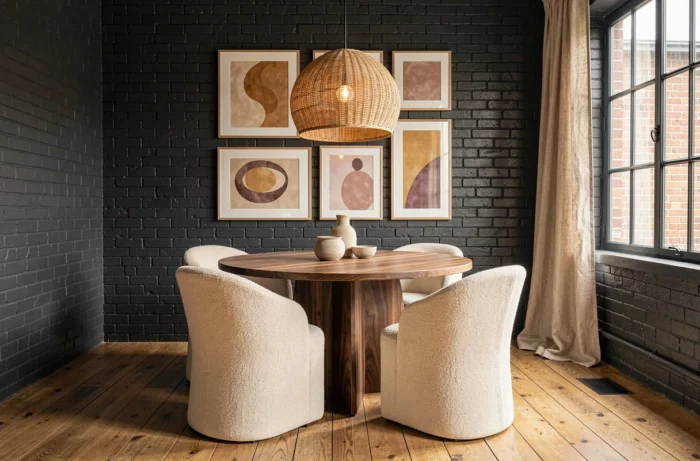
The interior design trends for 2026 mark a shift towards sculptural furniture: pieces with organic shapes, more imposing, designed to be seen as much as used. Oversized lighting fixtures, chairs with pronounced curves, and monolithic coffee tables in stone or solid wood become central elements.
The risk in a standard home is accumulating these strong pieces until the living room resembles a showroom. The logic is the opposite: one statement piece per space is enough to structure the decor. An imposing light fixture above the dining table, for example, does not need to be accompanied by an equally massive sideboard.
Budget and hierarchy of purchases
A quality sculptural piece represents an investment. For a limited budget, it’s better to focus spending on a visible item (the sofa, the kitchen table, a light fixture) and complement it with more discreet elements from second-hand or entry-level ranges.
- Invest in a designer light fixture that transforms the ambiance of an entire room, rather than in several small decorative accessories.
- Hunt for a vintage piece with curved lines, often cheaper than new and perfectly aligned with the trend of organic silhouettes.
- Keep existing functional furniture (storage, shelves) and only renew the piece that serves as the focal point.
Sustainable interior decoration: slowing down the pace of changes
The so-called slow decor approach, which has been gaining traction for a few seasons, offers a useful counterpoint to the acceleration of trends. The principle is to decorate less, but better: prioritize materials that age well (such as solid wood, linen, wool), accept patina, and space out purchases to keep only what has a true function or aesthetic value.
This approach also protects the budget in the long term. An artisanal ceramic object purchased from a local creator will withstand several cycles of trends. A plastic accessory dyed in the color of the year will end up at the back of a closet twelve months later.
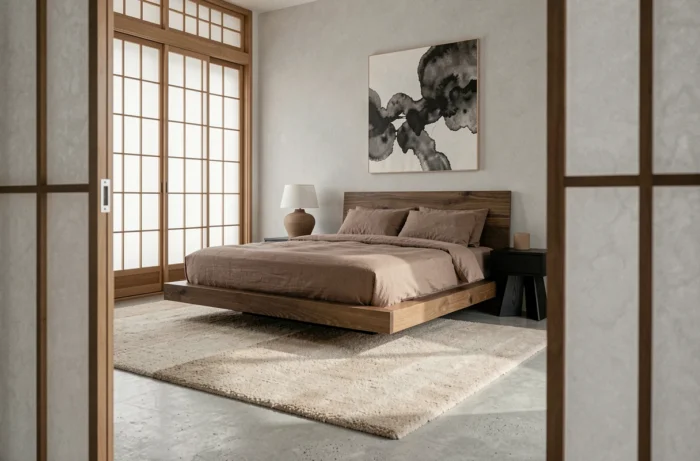
Adopting the 2026 decor trends in an already inhabited space means making targeted choices rather than a complete overhaul. A warm color on a wall, a natural material textile on the sofa, a sculptural light fixture above the table: three gestures are enough to refresh a space. The rest is the light of the home and time that do the work.