The September 2026 return reshapes the contours of women’s and men’s wardrobes under dual pressure: that of the spring-summer runways still influencing stores, and that of a French regulatory framework that changes how brands present their collections. Understanding the fashion trends of this season requires looking beyond colors and cuts, delving into the labels and legal obligations that now weigh on every piece sold online.
Anti-fast fashion law and mandatory labeling: what changes for the consumer
Since September 1, 2026, law n° 2026-602 of July 8, 2026, mandates online platforms and brands to include new messages encouraging moderation, reuse, and repair. The place of manufacture must be displayed near the price, accompanied by information on the environmental and social impacts of the garment.
In practice, this alters the shopping experience. A blouse spotted on a marketplace now displays, under its price, a note about its origin and a reminder oriented towards second-hand or repair. The act of purchasing fashion now incorporates a layer of regulatory information that did not exist a few months ago.
For those looking to discover fashion on Les Tendances de Mya, this new landscape encourages prioritizing pieces with clear traceability and documented durability. The trends of the season thus benefit from being viewed through this lens: a well-chosen garment is also one whose origin is known.

Key colors and materials for the autumn 2026 season
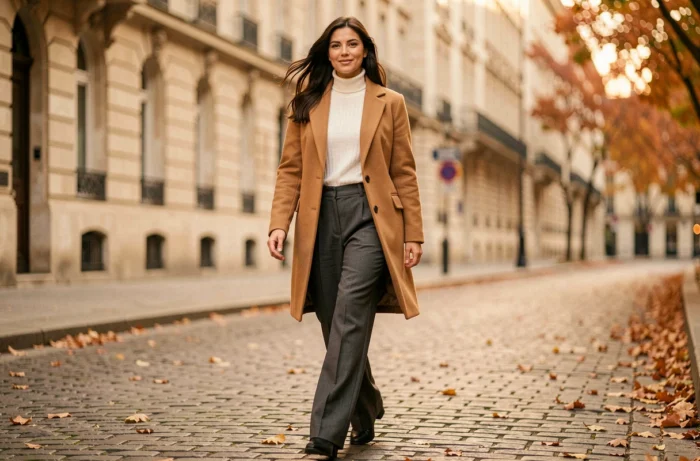
The spring-summer 2026 shows have established shades that persist in transitional collections. Butter yellow, omnipresent on the runways, is now seen in more autumnal pieces like thick knits and short trench coats. Earthy tones and rich beige are found on wide trousers and structured jackets.
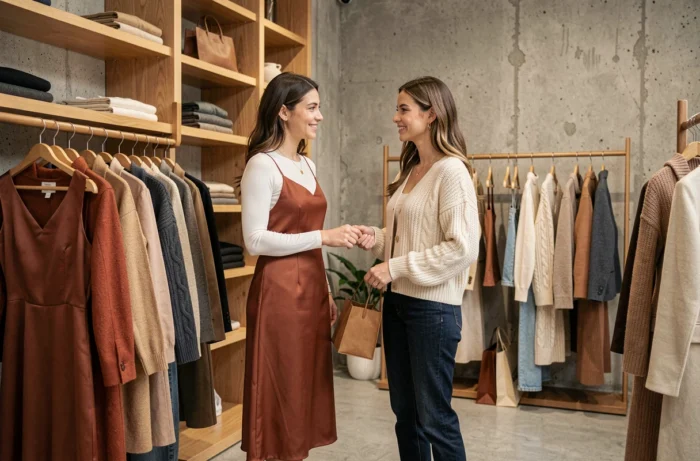
Warm colors dominate the back-to-school wardrobes, from caramel to rust, including deep burgundy. Saturated shades are giving way to more muted tones, worn in tonal variations rather than in monochrome blocks.
In terms of materials, knitwear remains a staple. The oversized sweater continues to thrive, worn over a flowy dress or tucked into barrel jeans, this wide and slightly tapered cut that has become the reference denim silhouette. Visible textures (wide ribs, twisted knit, crumpled linen) add relief without resorting to prints.
Patterns and prints to watch
Floral prints retain their place but in more graphic versions than in spring, set against dark backgrounds. Leopard print remains present in accessories (bags, belts, scarves) rather than in total looks. Breton stripes are reinvented in asymmetrical widths.
Field reports diverge on the return of the baroque pattern: very present on some runways, it struggles to convince in store sales. Choosing a subtle print on a quality piece proves to be more versatile than a trendy pattern worn for a season.
Silhouettes and key pieces for an elegant style this season
Three axes structure the silhouettes of the 2026 return: marked shoulders, suggested waist (not cinched), and lengths below the knee. The midi dress, worn with flat boots or loafers, remains the most transversal piece in the women’s wardrobe.
- The short colored jacket, worn open over a neutral top, replaces the classic blazer for daytime outfits. It works equally well in lightweight cotton or wool fabric for the first cool days.
- The high-waisted beige pleated trousers emerge as the most sought-after basic. Worn with a tucked-in shirt and gold accessories, it creates an effortless office-to-city look.
- The short trench coat, often mid-thigh, adds a layer of structure to fluid outfits. In gabardine or thick poplin, it serves as a lightweight alternative to the mid-season coat.
A wardrobe built around three to four strong pieces is better than an accumulation of micro-trends. The capsule logic (a limited number of combinable garments) aligns with the spirit of the new regulation that encourages buying less but better.
Fashion jewelry and accessories: choices that make a difference
Chunky gold jewelry is losing ground to finer, textured pieces. Flat chains, stacked rings, and sculpted earrings create a discreet yet present adornment. Textured accessories replace statement jewelry in back-to-school looks.
The structured medium-sized bag is making a strong comeback. Neither too large nor a clutch, it can be carried by hand or with a short shoulder strap, in grained leather or recycled material, another signal of the shift towards more sustainable choices.
Wide belts, worn over dresses or coats, redefine the silhouette without resorting to fitted cuts, are an accessory to consider. The scarf tied around the wrist or in the hair is also making a return, influenced by 70s retro-inspired trends.
European textile regulation and anticipated sustainable trends
Beyond the French law, the European Union is preparing to harmonize extended producer responsibility systems for textiles by January 2028. Ecodesign requirements focus on the durability, reparability, and recyclability of garments.
For consumers, this means that pieces designed to last will gain visibility and accessibility. Brands anticipating these standards are already offering ranges with detailed information on composition, fabric weight, and manufacturing conditions.
Adopting an elegant style this season is therefore not limited to choosing the right cut or color. The quality of the fabric, the brand’s transparency, and the versatility of the piece in an existing wardrobe become selection criteria as decisive as aesthetics. A trendy garment in 2026 is also one whose journey can be traced.