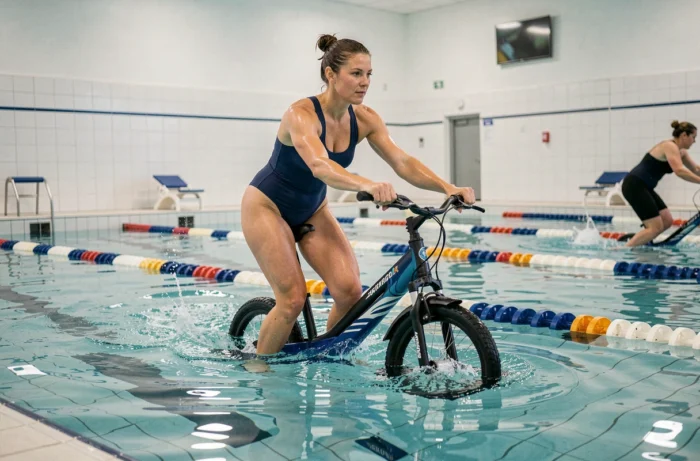
The price of an aquabike session varies widely depending on the type of facility, location, and chosen package. Between municipal pools, specialized private centers, and individual cabins, the price differences reflect very different services. Understanding these differences allows one to choose the package that best suits their practice and budget.
Comparison of aquabike prices by type of facility
The prices in France primarily depend on the setting in which the session takes place. Here is a summary table of the price ranges observed in the different available formats.
| Type of facility | Price per session | Package or subscription | Session duration |
|---|---|---|---|
| Municipal pool | 10 to 20 euros | 10-session card (discounted rate) | Generally 45 min |
| Private center (group class) | 20 to 40 euros | Monthly subscription or packages | 30 to 45 min |
| Individual cabin (private center) | 30 to 50 euros | Packages for series of sessions | 30 to 45 min |
To better assess aquabike and waterbike prices in France, it is also necessary to consider additional costs such as swimwear, water shoes, or swim caps, which may be mandatory depending on the establishments.
Public pools remain the most accessible entry point. In contrast, private centers justify their higher prices with enhanced supervision, high-end bikes, and dedicated pools.
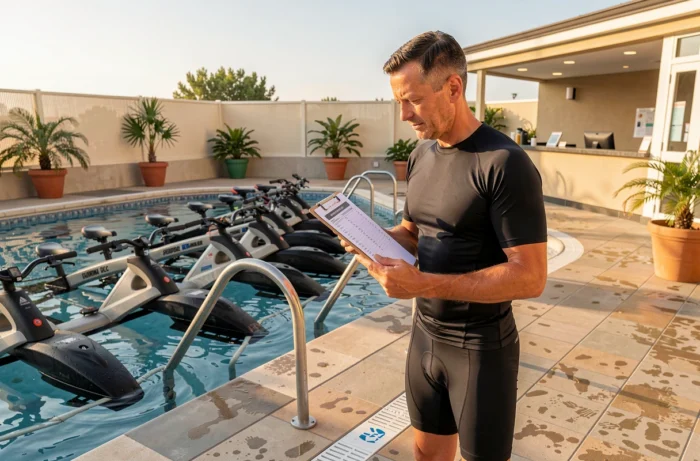
Geographical effect on the price of an aquabike session
Location plays a significant role in the pricing structure. In recent years, prices in major metropolitan areas, particularly Paris, have increased significantly. This rise is driven by the growing demand for wellness activities, combined with the increase in real estate, energy, and labor costs for private centers.
In medium-sized cities, municipal pools offering aquabike slots maintain prices close to the lower range. The gap between Paris and a medium-sized city can reach double the unit price.
This phenomenon of geographical polarization is not unique to aquabike. It affects all supervised aquatic activities in pools, where land costs and the scarcity of available slots drive prices up in densely populated areas.
Single session, package, or aquabike subscription: which format to choose
The choice of pricing format depends on the frequency of practice. Three formats coexist in most facilities.
- The single session is suitable for testing the activity or for occasional practice. Some centers offer a discovery session at a reduced price, sometimes refunded if a package is subscribed.
- The session package (5 or 10 units) offers a discount that reduces the unit cost. The more sessions purchased, the lower the price per session.
- The monthly subscription, often unlimited or capped at a certain number of sessions per week, remains the most advantageous option for regular practice (two sessions or more per week).
A monthly subscription becomes cost-effective with just two weekly sessions in most private centers. Below this frequency, the session package offers a better value for money.
Hidden fees to check before committing
Some subscriptions include annual registration fees or commitment periods of several months. Others impose a notice period for cancellation. Checking these conditions before signing helps avoid unpleasant budget surprises.
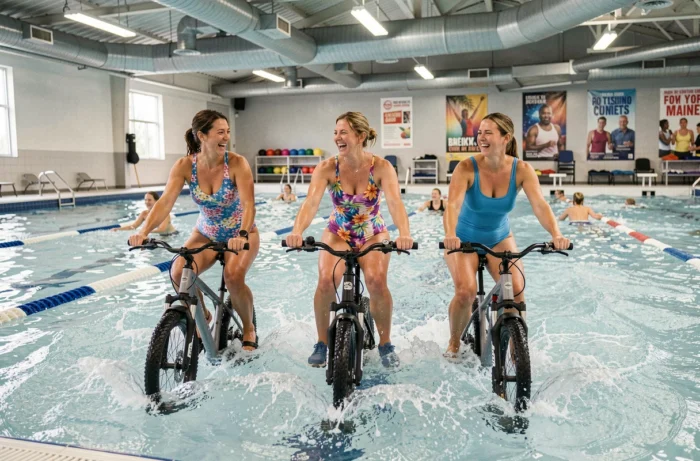
Aquabike in an individual cabin or in a group class: impact on price
Individual cabins represent the most expensive segment of the market. The principle is based on individual pools equipped with an immersed bike, with a program displayed on a screen. The practitioner follows the session at their own pace, without a live coach.
The cost of a professional aquabike is around 1,000 euros, which partly explains the high price of sessions in cabins. The material investment per unit is the same, whether the pool is shared or individual, but the amortization occurs on a single user at a time.
The group class, supervised by a qualified coach, distributes the cost of supervision across a group. It is the format that offers the best balance between price and quality of support. Groups generally consist of fewer than ten participants, allowing for personalized assistance.
Supervision and qualifications: a less visible cost factor
A point rarely addressed in price comparisons concerns the regulatory supervision of sessions. The presence of a qualified supervisor is mandatory for any aquatic activity, even in shallow pools. This requirement is in addition to the sports coach who leads the class.
A center that employs a qualified coach and a lifeguard incurs higher payroll costs, which is reflected in the final price. Facilities that compress these costs by limiting supervision take a regulatory and safety risk.
- Check that the coach has a valid professional sports educator card
- Ensure that a lifeguard with a recognized diploma is present during the session
- Prefer centers that clearly display their staff’s qualifications
This quality of supervision criterion often justifies a price difference between two centers located in the same geographical area. An abnormally low price may indicate insufficient supervision.
The price of an aquabike session in France ranges from about ten euros in a municipal pool to around fifty euros in a private cabin. The frequency of practice remains the determining factor in choosing the package: beyond two sessions per week, the monthly subscription absorbs the price difference with the session package in just a few weeks.