
The depreciation of a parking space is not calculated the same way as that of an apartment. The nature of the asset (closed box, underground space, outdoor spot) modifies the accounting duration, the applicable tax regime, and sometimes even the possibility of depreciation. Understanding these distinctions allows one to measure the real impact on the net profitability of a rental investment in parking.
Built parking or empty space: what changes for accounting depreciation
The first variable to isolate is not the tax regime, but the physical nature of the parking. A garage, box, or covered parking constitutes a construction, thus an asset that can be depreciated over its actual duration of use. Accounting practices generally consider a duration between twenty and fifty years, depending on the condition of the structure and the materials used.
An empty outdoor space, simply marked on the ground without a built structure, falls into another category. It is considered as land. However, a piece of land does not depreciate and is never depreciable, whether the asset is held in a real estate investment company (SCI) subject to corporate tax or in a non-professional furnished rental (LMNP). This distinction, rarely detailed in general guides, changes the game for investors targeting surface spots in a subdivision or a condominium without covered parking.
Before modeling the taxation of a parking space, it is therefore essential to precisely qualify what is being purchased. Questions related to the depreciation and duration of a parking space directly depend on this qualification as construction or land.
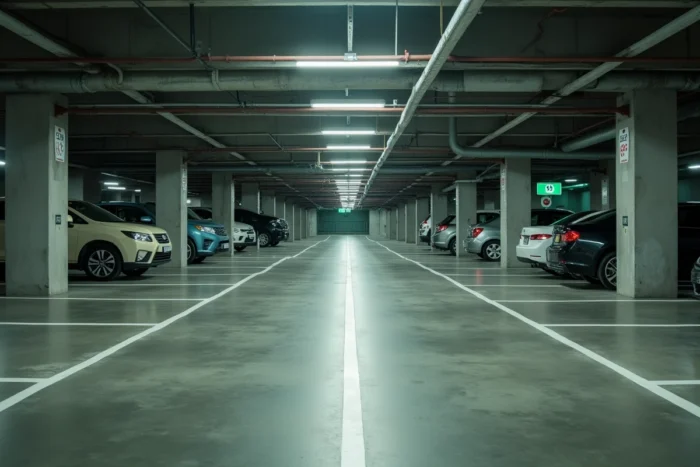
Depreciation duration of a parking space: comparative table by component
Component-based depreciation applies to built parking just like any real estate asset. Each structural element is assigned its own duration.
| Component | Indicative depreciation duration | Estimated share |
|---|---|---|
| Structural work (concrete structure, slab) | 30 to 50 years | Majority |
| Roof / waterproofing | 20 to 25 years | Significant part for a covered box |
| Electrical installations (lighting, motorized door) | 15 to 20 years | Modest share |
| Garage door, removable equipment | 10 to 15 years | Low |
| Land (non-built part) | Non-depreciable | Variable depending on location |
The decomposition is based on the general accounting plan. The land share must be isolated from the acquisition price before any depreciation calculation. For a basement box in a building, this share is often reduced. For an individual garage with a footprint, it may represent a more visible fraction of the price.
Applicable tax regime: LMNP, SCI subject to corporate tax or rental income
The regime under which the parking is held determines the depreciation method and its tax utility.
Parking as an annex to a furnished rental in LMNP
In LMNP under the real regime, depreciation reduces taxable income without generating cash outflow. However, the parking must be an inseparable annex of the furnished rental, meaning it is rented with the apartment or attached to the same lease. A parking space rented alone does not fall under LMNP, as the rental is not furnished.
LMNP depreciation cannot create a tax deficit. If the depreciation charge exceeds the result, the excess is carried forward indefinitely to subsequent periods.
Parking held via an SCI subject to corporate tax
The SCI subject to corporate tax depreciates the parking according to the same accounting rules as any business. Depreciation reduces the taxable income at the corporate tax rate. However, upon resale, the capital gain is calculated on the net accounting value (purchase price minus depreciation applied), which mechanically increases the taxable base.
Unfurnished rental and rental income
A parking space rented unfurnished without attachment to a furnished lease generates rental income. In this context, no depreciation is deductible. Only actual expenses (property tax, maintenance work, loan interest) reduce taxable income under the real estate regime.

Impact of depreciation on the capital gain upon resale of a parking space
Depreciation provides a tax advantage during ownership, but it also alters the equation at exit. The treatment differs depending on the regime.
- In LMNP, the capital gain falls under the regime for individuals. The deducted depreciations are not reintegrated into the calculation of the capital gain. The taxable base is based on the initial purchase price, with allowances for the duration of ownership.
- In SCI subject to corporate tax, the capital gain is calculated on the net accounting value. Each euro depreciated increases the taxable capital gain at the corporate tax rate. The tax advantage of depreciation during ownership is therefore partially recaptured upon resale.
- In unfurnished rental (rental income), the question does not arise since no depreciation has been applied. The capital gain follows the classic regime for individuals with progressive allowances.
This reintegration mechanism in SCI subject to corporate tax leads some investors to prefer LMNP for built parking attached to a furnished rental, precisely because LMNP depreciation does not burden the tax on resale.
Accounting declaration: items not to forget
The declaration of depreciation for a parking space requires correctly allocating the acquisition price. Three items are often underestimated or forgotten.
Notary fees and registration fees can be capitalized and then depreciated, or expensed in the first year. The choice depends on the chosen tax strategy. Agency fees related to the acquisition follow the same treatment.
The motorized garage door, if it exists, constitutes a distinct component with a shorter depreciation duration than the structural work. Failing to distinguish it means underutilizing the decomposition mechanism.
A parking space purchased in a condominium incurs condominium charges, but these are not depreciable. They are deductible as current expenses under the real regime.
The net profitability of a parking space depends as much on the purchase price and rent as on the chosen tax regime. A covered box in LMNP attached to a furnished lease offers the most favorable depreciation leverage, with no penalty upon resale. An empty outdoor space, on the other hand, will not benefit from any depreciation, regardless of the legal arrangement chosen.